Backyard Ultras: Finding Your Limits, One Yard at a Time
Helen KeithWe got in touch with ambassador Stuart Obree to find out more about Backyard Ultras, and how Active Root can help fuel you for it. Here's what he had to say!
Most races have a finish line. You know exactly where you’re going, roughly how long it’ll take, and, assuming things go to plan, when you’ll be done.
Backyard ultras are different
They don’t really ask, “How fast can you run?” Instead, they ask a much more uncomfortable question: How long can you keep showing up?
That’s what makes them so fascinating.
For anyone unfamiliar with the format, a backyard ultra is deceptively simple. You run a 4.167-mile loop every hour, on the hour, until only one runner remains. Finish a loop in 45 minutes and you get 15 minutes to recover. Finish in 58 minutes and you get two minutes. Miss the bell for the next lap and you’re out.
Simple in theory. Brutal in practice.
There’s something wonderfully honest about a backyard ultra. It strips endurance running back to its essentials. No fancy pacing strategy. No chasing arbitrary splits. No obsessing over how far remains. The only thing that matters is getting back to that start line, ready to go again.
My recent race at God’s Own Backyard Ultra reminded me exactly why this format gets under your skin. I completed 28 yards (116.7 miles) before timing out on yard 29.
The main reason? Heat. As a ginger Scotsman, I probably should’ve known better than to take on a backyard ultra during a heat wave, with temperatures reaching 30 degrees, as if it was going to be a walk in the park.
Spoiler: it wasn’t.
What’s interesting about backyard ultra racing is that the suffering doesn’t always arrive when you expect it. People assume things get hard late in the race, somewhere after midnight when sleep deprivation kicks in and everyone starts talking nonsense.
Sometimes that’s true, but hard can show up early too.
There were yards early on that felt tougher than they should have, but they passed. That’s one of the biggest lessons the format teaches you: bad patches rarely last forever if you stay calm. Later, though, the heat really started to take hold. Each lap became that little bit harder, each recovery slightly less effective, and the margin for error slowly disappeared.
A gradual accumulation of fatigue, heat and inefficiency until there was nowhere left to hide.
And that’s often how these races get you: not through one catastrophic moment, but through a thousand tiny decisions.
Why fuelling matters so much
In a backyard ultra, nutrition isn’t just about eating enough calories. It’s about staying ahead of problems before they appear. Small mistakes in hydration or fuelling might feel insignificant in hour three, but by hour twenty they can become race-ending.
That’s why I keep my approach as simple and reliable as possible, and why Active Root has become such a big part of both my training and racing.

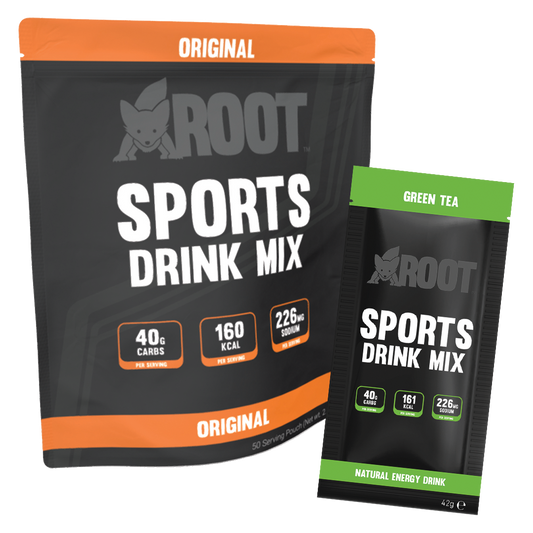
I use the Sports Drink Mix and Electrolite regularly to stay on top of hydration, especially in long efforts. At God’s Own, that became critical once the heat started ramping up. Hydration issues don’t usually announce themselves loudly, they creep in quietly, making everything feel just that little bit harder until you suddenly realise you’re working far too hard for the same output.
For quick energy on the move, I rely heavily on the Energy Chews. They’re practical, easy to carry out onto the yard and easy to eat while moving, which matters more than people realise. When you’re tired, simplicity wins.
As the race goes deeper, though, fuelling gets weird.
Foods you happily ate earlier suddenly become completely unappealing. Sweet becomes too sweet. Savoury somehow becomes offensive. Even deciding what you fancy can feel mentally exhausting.
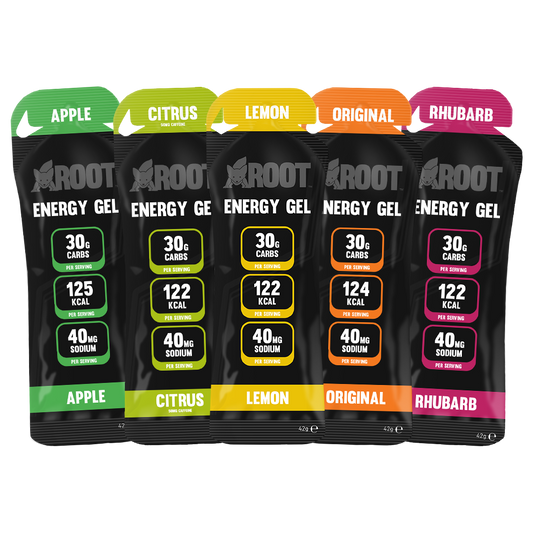
That’s where the Energy Gels really come into their own for me. The five different flavours help massively with taste fatigue, and having variety becomes surprisingly important when you’ve been fuelling for hours on end.
Adding in the Gel Mix, gives me another easy way to keep energy intake consistent without upsetting my stomach.
That last part matters most.
When you’re deep into a race, gut comfort becomes everything. You don’t want to be negotiating with your nutrition while trying to keep moving forward. Active Root’s ginger-based products consistently sit well with the gut, even late in races when digestion becomes more sensitive.
And after long training sessions or races, the Recovery Drink helps me get recovery started quickly, which matters because recovery is part of training, whether we like it or not.
Another thing backyard ultras teach you is humility
At a certain point, decision-making becomes overrated.
You’re tired. Your brain slows down. Simple choices suddenly feel strangely complicated.
That’s where having a good crew becomes invaluable.
My between-yard strategy is highly sophisticated: I sit in my chair and do exactly what my crew tells me.
That’s it.
I eat what I’m handed. I drink what I’m given. I trust the process.
It sounds simple, but removing decision-making saves enormous mental energy. The longer a race goes, the more valuable that becomes.
Mentally, I was actually in a really good place throughout God’s Own. No hallucinations. No grumpiness. No emotional wobble. I stayed positive and focused on what mattered.
Not the previous yard.
Not the next ten.
Just this one.
That, to me, is the real magic of backyard ultras.
They force you to stay present.
You stop thinking about total mileage. You stop thinking about tomorrow. Everything narrows until your entire world becomes one loop, one recovery, one more trip back to the start line.
And perhaps that’s why I keep coming back.
Because backyard ultras aren’t always won by the fastest or strongest runner. More often, they’re won by the person who can keep making good decisions long after everyone else has stopped making them.
The runner who keeps showing up.
Hour after hour.
Yard after yard.
Until they can’t.
At God’s Own, that point came for me after 28 yards, once again learning that being a Ginger Scotsman running during a heatwave was not the smartest choice.
And that’s the cruel beauty of backyard ultras.
They always leave you with the same question:
How much more did I have?
And more often than not, that question alone is enough to get you back on the start line.
Stuart’s Top 3 Tips for Your First Backyard Ultra
Before I wrap up, if you’re thinking about giving a backyard ultra a go yourself, here are the three biggest lessons I’ve learned from racing them.
None of them are complicated.
But all of them matter.
1. Start slower than your ego wants to
One of the biggest mistakes I see is runners treating the early yards like a race.
It isn’t. At least, not yet.
The first few yards should feel almost too easy. If you’re breathing hard or pushing pace early on, you’re probably burning matches you’ll desperately want later. Backyard ultras reward patience far more than speed.
Leave your ego at the start line.
2. Fuel and hydrate early, don’t wait for problems
If you wait until you’re hungry, thirsty or cramping, you’re already playing catch-up.
Backyard ultras are all about staying ahead of the curve. Keep fuelling consistently, keep drinking, and make hydration a priority from yard one. Having reliable products you know your stomach tolerates, especially deep into a race, makes a huge difference.
Simple, repeatable fuelling wins.
3. Stay in the current yard
This is probably the biggest one.
Don’t think about 100 miles. Don’t think about 24 hours. Definitely don’t think about how many yards everyone else is doing.
Just focus on this lap.
Run this yard. Recover from this yard. Prepare for the next yard.
That’s all.
The moment you start mentally negotiating with hours you haven’t reached yet, the race gets
overwhelming. Keep bringing yourself back to the present.
One yard at a time.
Stuart Obree is a member of the Active Root 2026 Ambassador Team.
Instagram: @stu_likes_to_run | @obreecoaching